
How to Prepare Your Asphalt Driveway for Winter in Vaudreuil-Soulanges
PolyScellant · November 2026
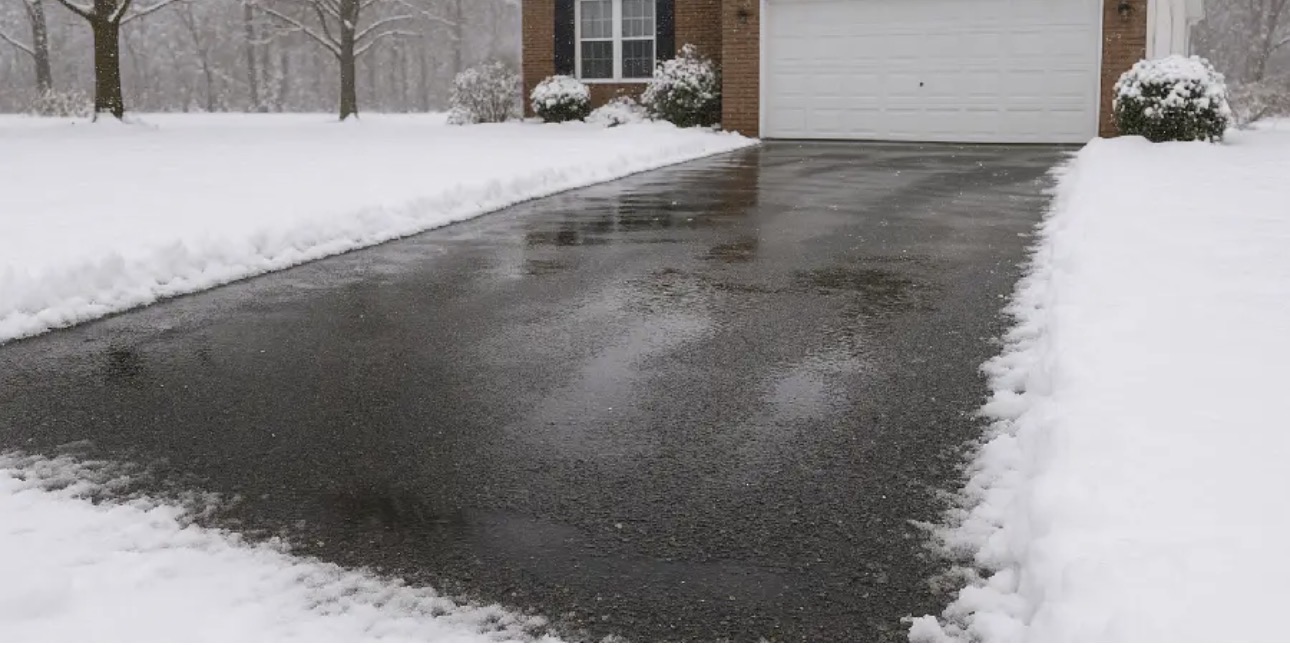
Québec winters are tough on asphalt driveways. Between snow, ice, temperature changes and snow removal, your driveway faces challenging conditions for several months. Fortunately, a few simple maintenance steps can help reduce damage and prevent unpleasant surprises in spring. Whether you live in Saint-Lazare, Hudson or Vaudreuil-Dorion, here is how to prepare and protect your driveway before and during winter.
Why is winter so hard on asphalt?
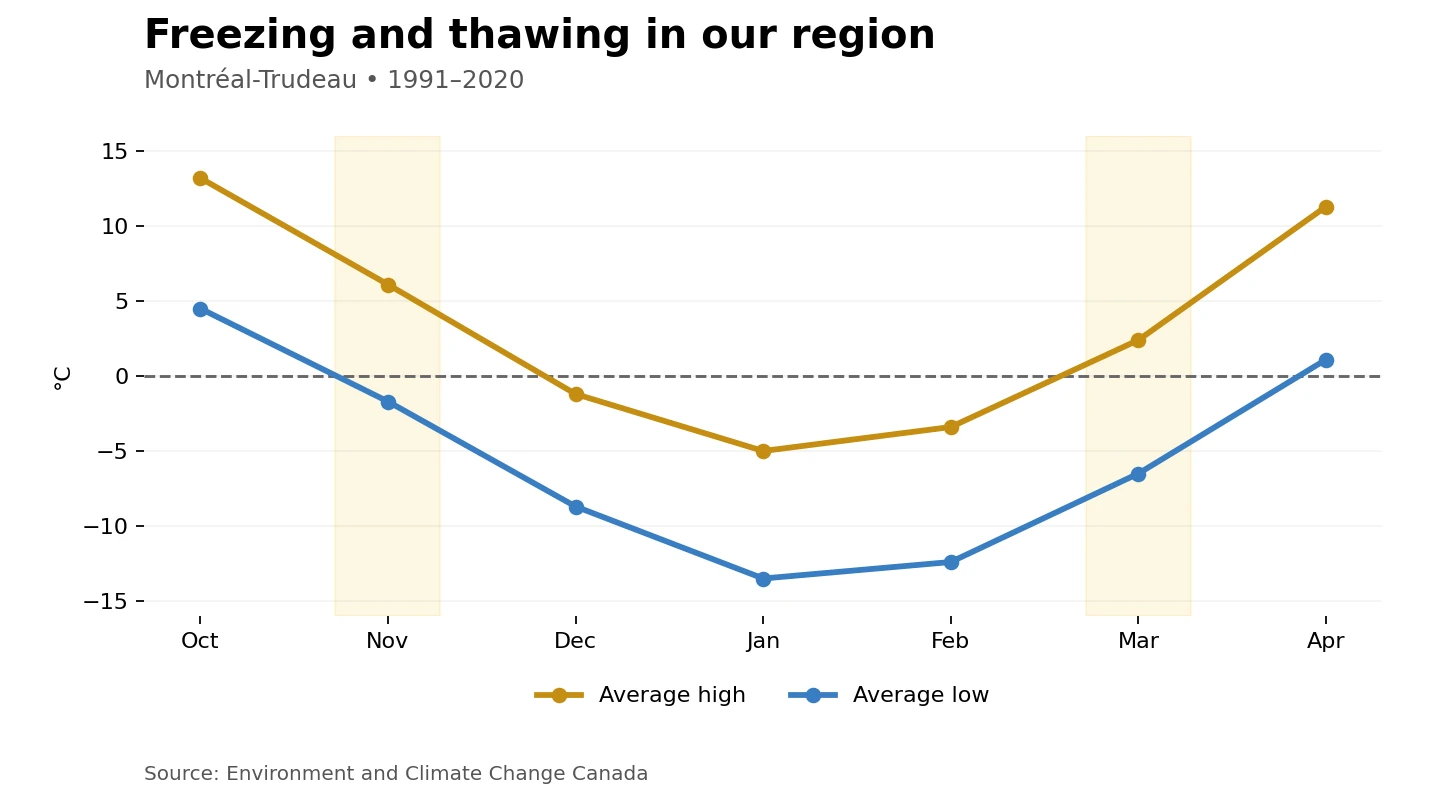
In November, average daily highs reach 6.1°C and lows −1.7°C; in March, the corresponding values are 2.4°C and −6.5°C. These air-temperature normals do not measure actual freeze–thaw cycle counts or the temperature of your driveway.
Cold temperatures are only part of the problem. Repeated freezing and thawing can contribute to asphalt deterioration. Historical climate normals for Montréal-Trudeau illustrate the seasonal temperature changes near our service area.
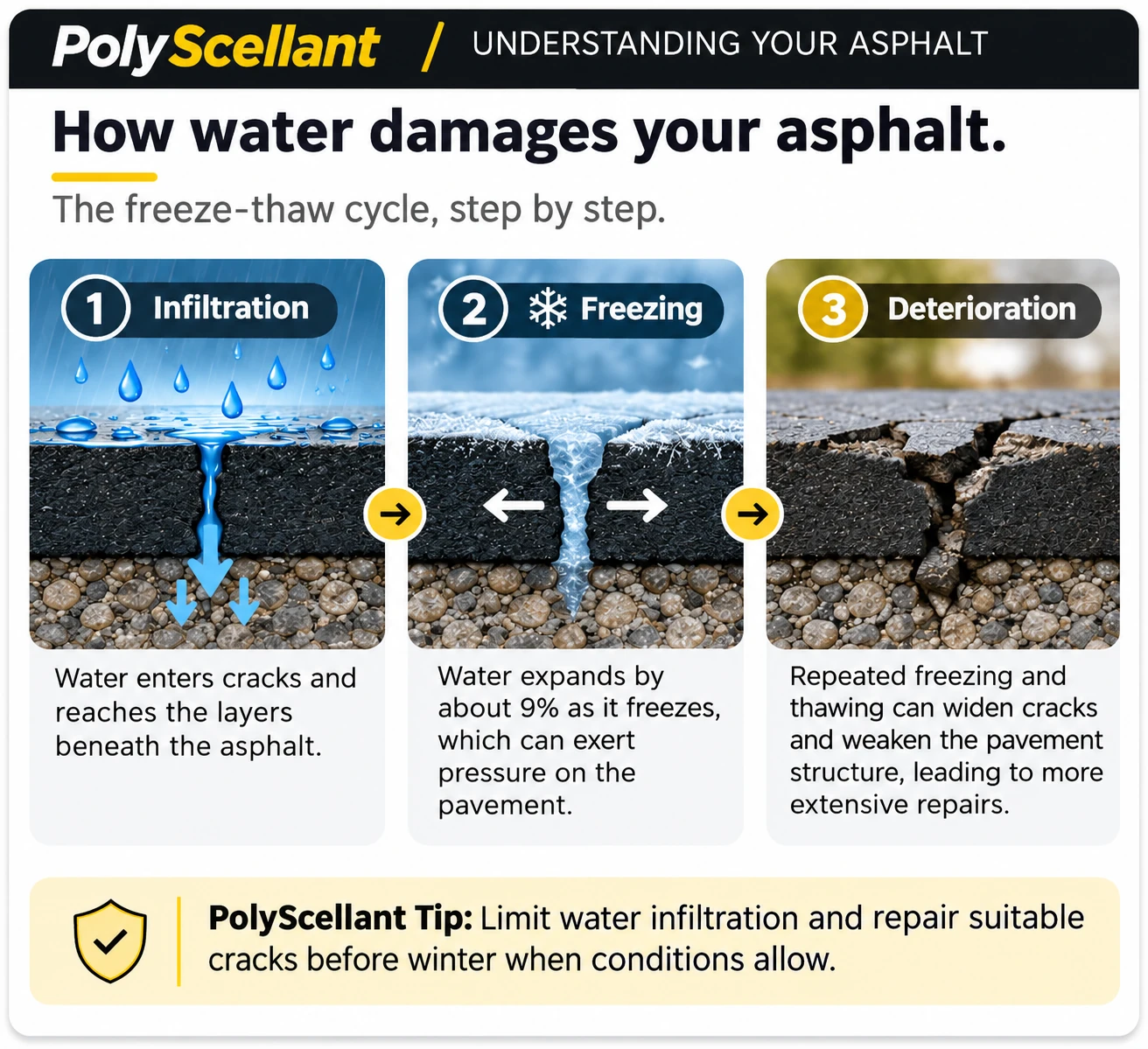
When water enters a crack and freezes, it expands. During a thaw, the layers beneath the asphalt can become less capable of supporting vehicle loads. Over time, these conditions may worsen cracks, contribute to settlement and lead to potholes. The goal is simple: reduce water infiltration and avoid making existing damage worse.
Learn more about freezing and thawing
1. Clean your driveway before snow accumulates
Start by removing fallen leaves, branches, soil and other debris. A clean driveway makes it easier to spot cracks and drainage issues that might otherwise go unnoticed. Pay particular attention to driveway edges, garage entrances, drain grates and areas where water regularly collects. A stiff broom or leaf blower is usually enough.
2. Check where the water goes
The next time it rains, observe your driveway. Does water drain properly? Does it collect in front of the garage or settle in the wheel paths? Check your eavestroughs and downspouts as well. Water continually discharged onto your driveway can contribute to ice formation when temperatures drop overnight. If water repeatedly collects in the same spot, take a photograph.
Asphalt sealer cannot correct poor grading, pavement settlement or drainage problems. The underlying cause must be understood first.
3. Do not ignore asphalt cracks
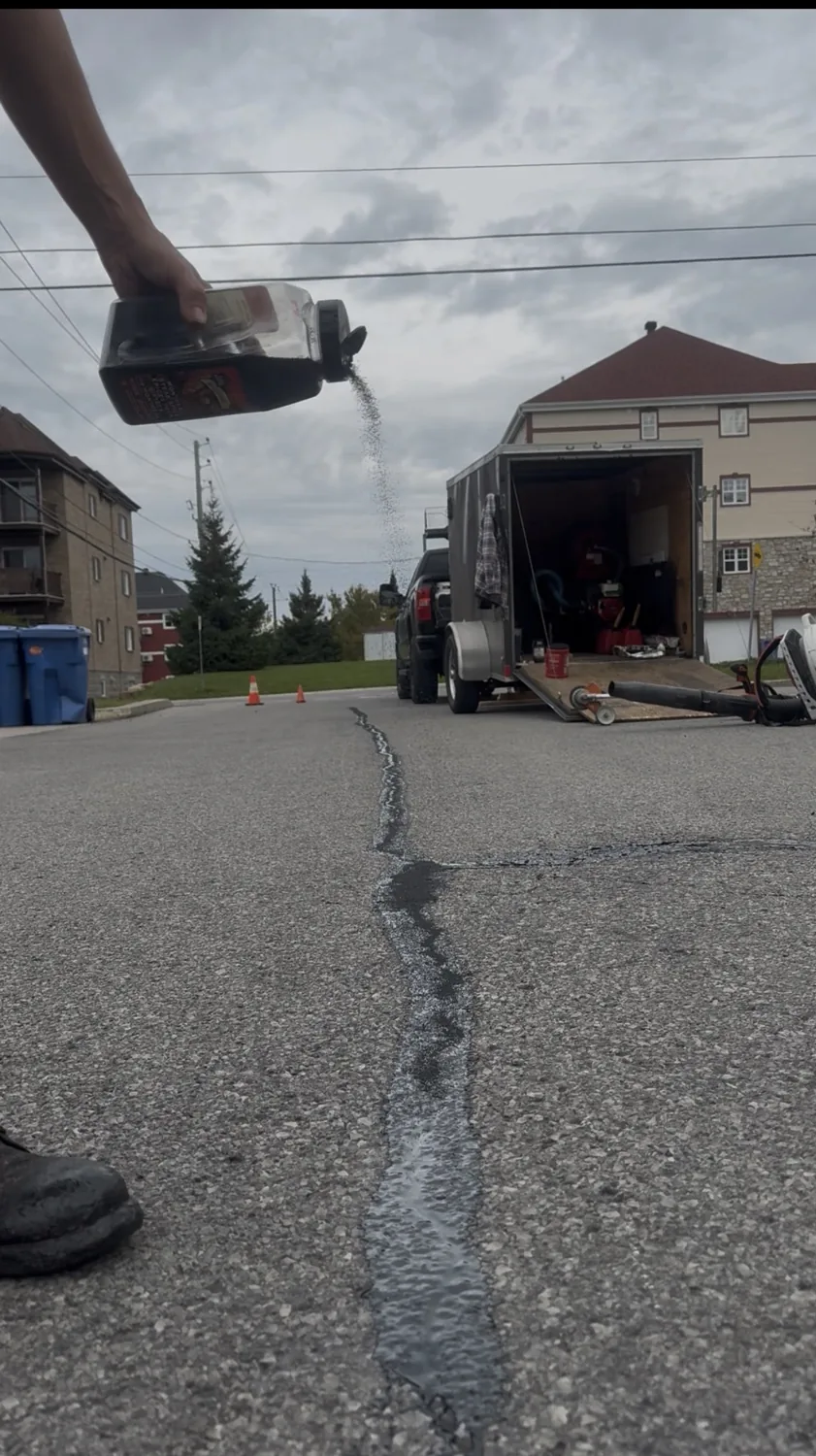
A small crack may not seem important, but it can provide an opening for water. Isolated open cracks may benefit from suitable crack sealing; alligator cracking, potholes and settlement may require structural assessment or repairs. At PolyScellant, we assess cracks before selecting a treatment. When conditions are suitable, we use professional RynoWorx RY10 Pro equipment to apply hot rubberized crack sealant.
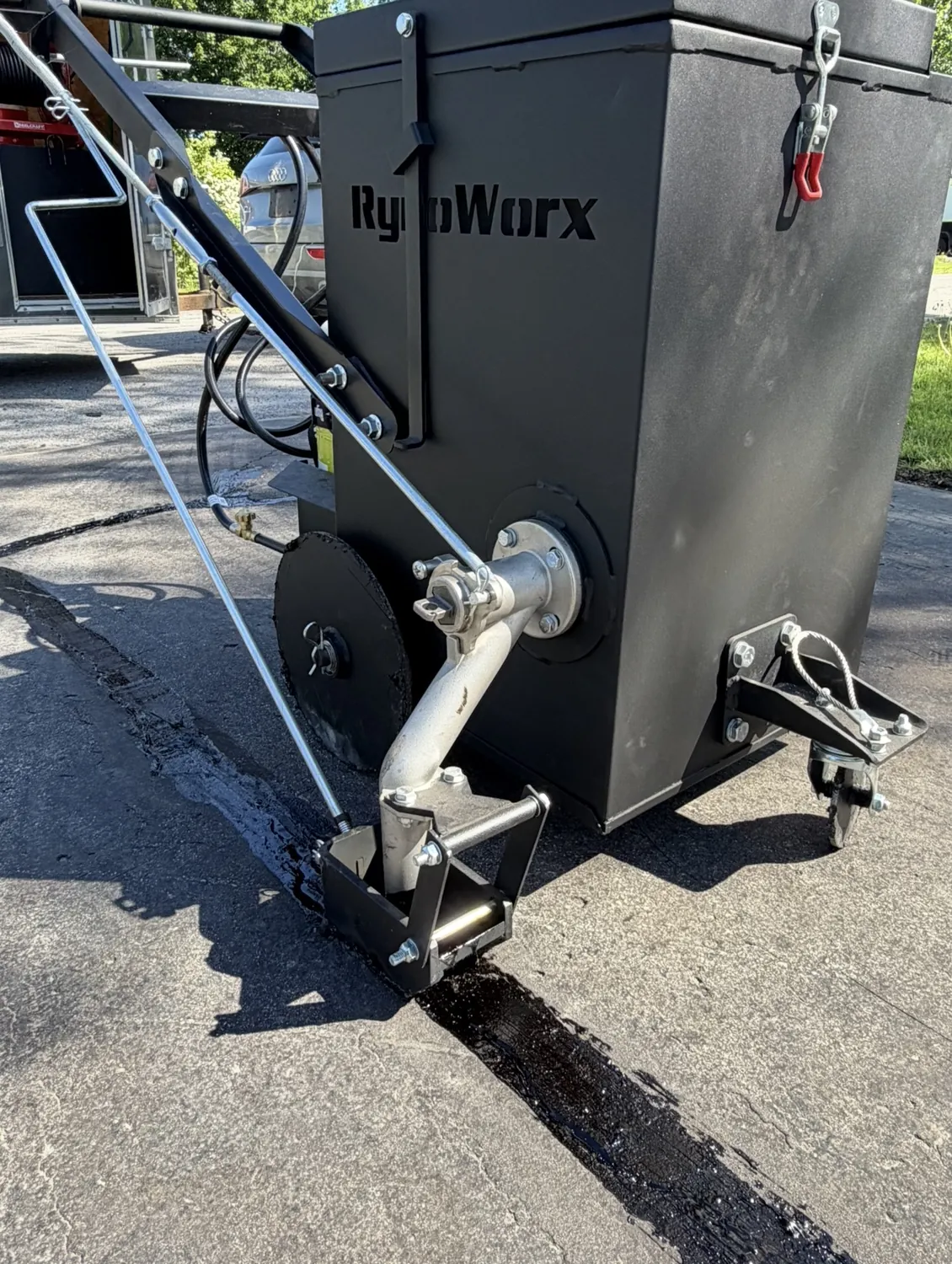
This flexible material helps reduce water infiltration while accommodating some pavement movement. We also apply black quartz aggregate to help reduce fresh sealant sticking to tires. This is preventive maintenance, not a way to rebuild a damaged foundation.
Learn more about asphalt crack repair.
4. Is November too late to seal your driveway?
November generally marks the end of the asphalt sealing season in Québec. At PolyScellant, 10°C is our minimum threshold for considering surface sealing, not an automatic green light. We also evaluate pavement temperature, moisture and the forecast, and follow product requirements. If you missed the autumn window, you can still clean your driveway, prepare for snow removal, document damage and plan repairs for spring.
Read our guide to the best sealing season.
5. Prepare your driveway for snow removal
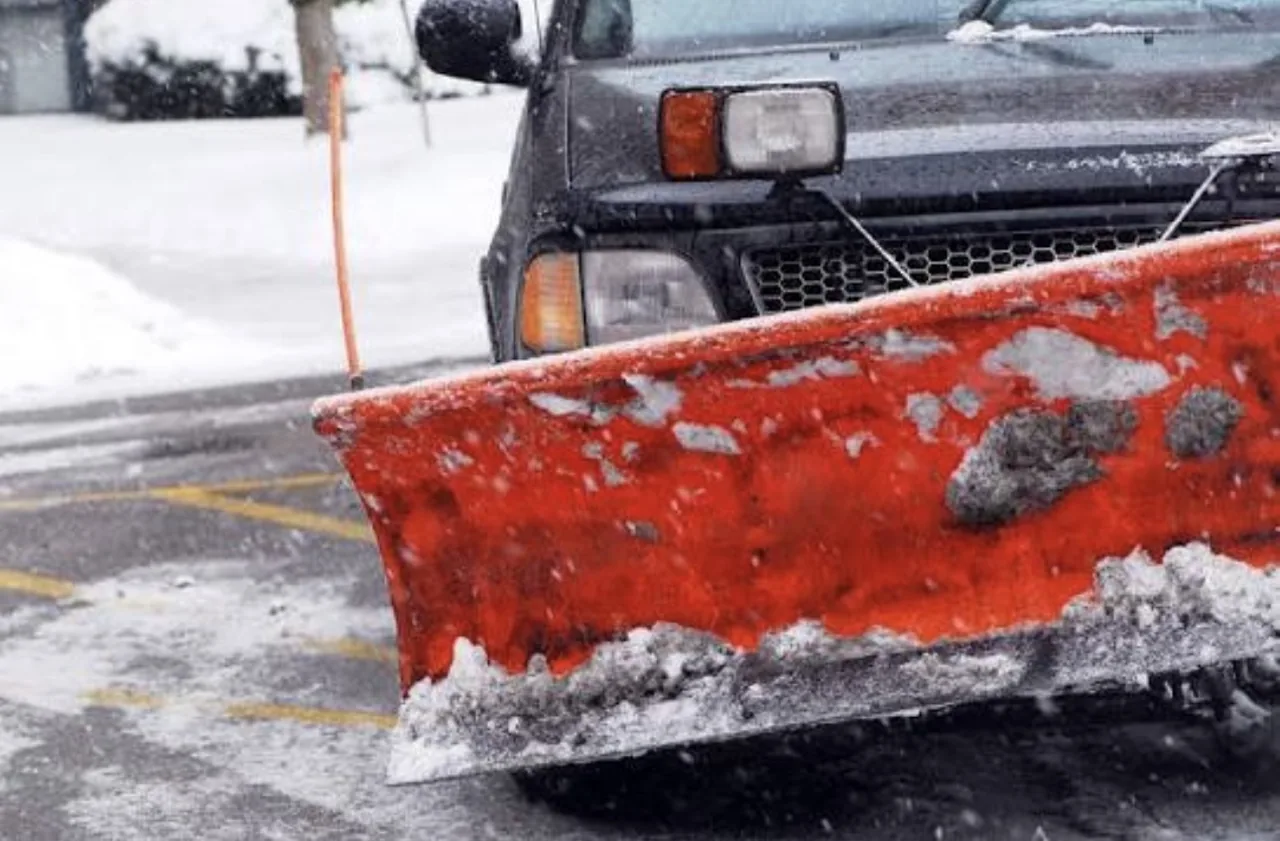
Once your driveway is covered in snow, its edges and uneven areas become difficult to see. Install visible driveway markers, identify fragile edges and raised or sunken areas, show damaged areas to your snow-removal contractor and choose where snow will be stored. Consider where meltwater will flow. A sturdy plastic shovel is useful for fresh snow. Avoid repeatedly striking asphalt or repaired cracks with metal ice-breaking tools.
6. Use ice melters wisely
Salt helps melt ice, while sand primarily improves traction. Some de-icing products become less effective at very low temperatures. Clear snow first, follow the manufacturer’s instructions, apply only the amount needed and remove loosened snow and ice. Check compatibility with nearby concrete, paving stones, metal and vegetation. Excessive salt use can negatively affect the environment.
7. Monitor your driveway during winter thaws
During winter thaws, observe where water collects and clear accessible drainage outlets when safe. If an ice patch keeps forming in the same location, the problem could be drainage rather than a lack of salt. Make a note so it can be addressed when conditions improve.
Your winter preparation checklist
Frequently asked questions
Should every crack be repaired before winter?
Have cracks assessed; condition and weather determine the appropriate treatment and timing.
Does asphalt sealer protect against winter damage?
A suitable sealer can help protect the surface, but cannot replace crack repairs or correct drainage and foundation problems.
Can cracks be repaired in winter?
Some treatments may be possible, but frozen or wet pavement is generally unsuitable for conventional crack sealing.
Does sand melt ice?
No. Sand improves traction.
What if snow has already arrived?
Focus on safe snow removal, ice management and planning spring repairs.
Protect your asphalt investment
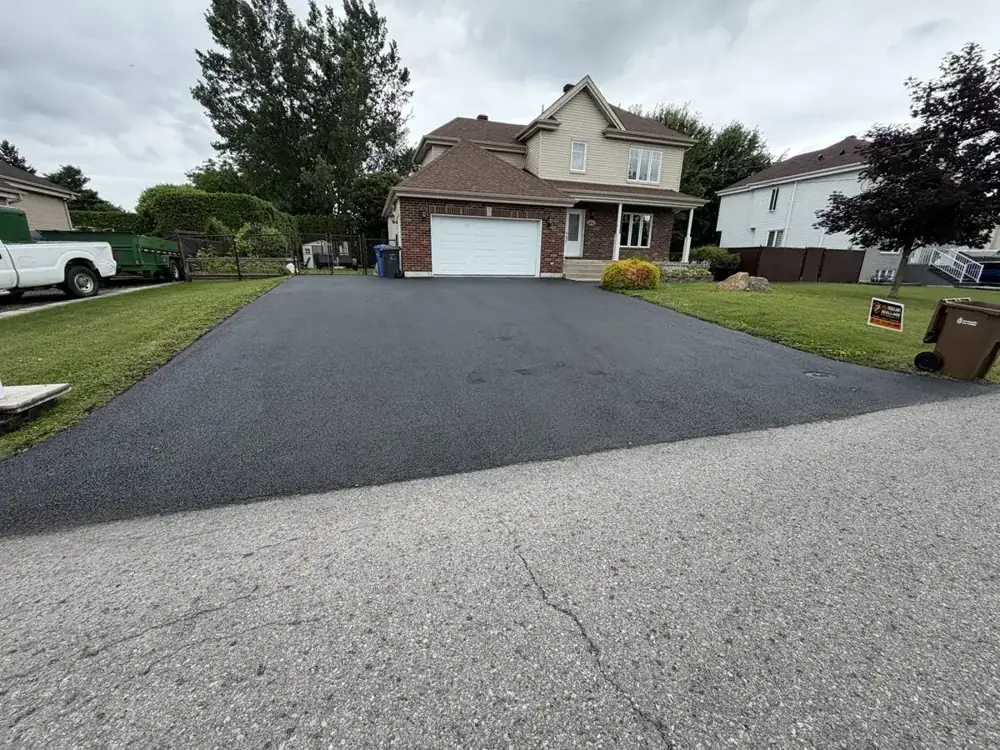
An asphalt driveway is a significant investment. Appropriate preventive maintenance can help extend its useful life. Whether you live in Rigaud, Coteau-du-Lac or elsewhere in Vaudreuil-Soulanges, PolyScellant can help you plan your maintenance.