
Asphalt Driveway Potholes: Causes and How to Repair Them
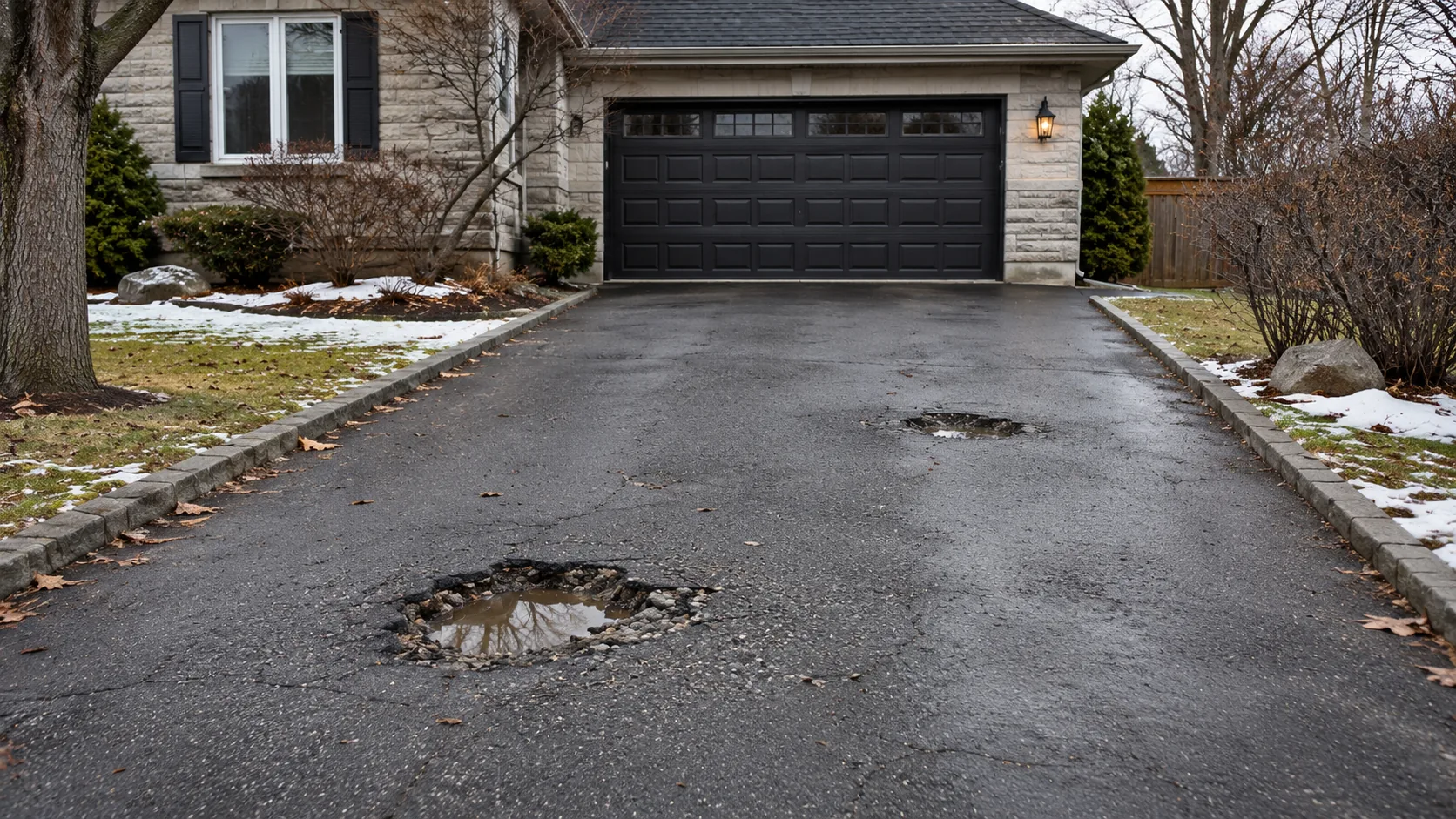
After a thaw, you spot a hole in your driveway. Chunks of asphalt have come loose, and the hole is right beside your tire track. Is filling the hole enough? Should you cut out the damaged section? Does the stone underneath need work too?
The right fix depends on what gave way. If the damage is limited to the asphalt and the stone underneath is firm, the area can often be repaired on its own. If the base has sunk or stays soft, find out why before choosing a repair.
Why do potholes form in asphalt driveways?
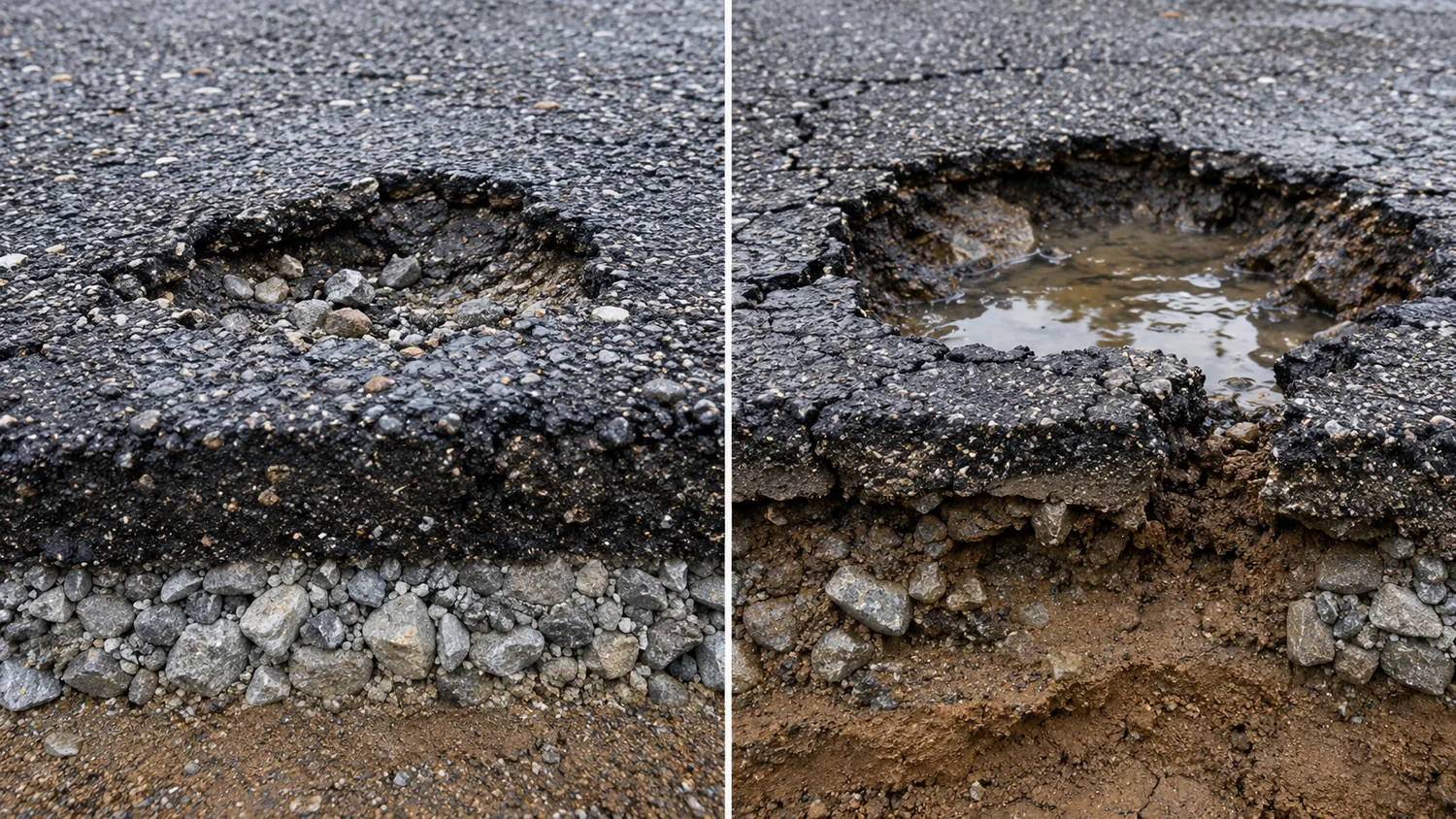
A pothole forms when pieces of asphalt break away and leave a hole. A crack is a split in the asphalt. A low spot can hold water even when the asphalt is still in place. All three can show up in the same area, and each can call for different work.
The damage can start at a crack, where two sections of asphalt meet, or around an old patch. Water can get in through these gaps or along the edges. If it drains poorly, it can weaken the layers that support the driveway. Freezing and thawing can shift those layers. As tires roll over the weakened spot again and again, pieces can break loose. [1, 2, 3]
Thin asphalt, a mix that crumbles, or layers that do not stick well can also lead to a pothole. If water keeps pooling in the same place, see our guide to why water pools on an asphalt driveway. [1, 2]
Is the damage only at the surface?
The granular base is the layer of compacted crushed stone under the asphalt. It helps spread the weight of vehicles. The soil lies below it. Compaction means pressing the materials together firmly so they hold in place and support that weight. [1, 3]
A small hole surrounded by sound asphalt may need only a local repair. If the stone is firm and any lower layers of asphalt are sound, the work may be limited to the damaged layer. In other cases, all the asphalt at that spot may need to come out while the stone stays in place. [1, 2]
Look for these signs that the area needs a closer check.
- The same hole comes back after repair.
- The low spot around the hole keeps getting bigger.
- Cracks join up and form small blocks.
- Pieces around the hole shift or break loose.
These signs can point to a weak base, a problem in the asphalt itself, or a problem with how it was laid. A photo helps you track changes. Even if the stone you can see looks firm, a deeper layer may be weak. An on-site check helps determine whether the deeper layers need a closer look. [2, 3, 4]
Which repair should you choose?
| What you’re choosing | Option | When to consider it |
|---|---|---|
| Material | Cold mix | To keep the driveway usable when the product suits the weather. The patch may be temporary. |
| Material | Hot-mix asphalt | To replace damaged asphalt when the mix can be laid and compacted while it’s still hot. |
| Method | Cut out and replace | To remove damaged asphalt back to sound edges and check what’s underneath. |
| Method | Infrared repair | To rework a shallow defect when the asphalt can be heated and reused and the base is stable. |
| Depth | Asphalt only | To repair the damaged pavement when the layers underneath are in good shape. |
| Depth | Down to the base or soil | To repair weak layers beneath the asphalt and improve drainage if needed. |
These choices can go together. After cutting out a section, a crew can lay hot-mix asphalt and leave the base in place. If the inspection finds weak stone or soil, the same opening can be used for a deeper repair. [1, 2, 4]
Cold patching
Cold mix can be laid without heating it like hot-mix asphalt. It can help keep the driveway usable in winter. In general, loose debris, water, snow and ice are cleared from the hole. The mix is placed and packed down as directed on the product sheet. Some products are made for longer-lasting repairs when the conditions are right. An emergency patch put in during bad weather may need to be redone when conditions improve. [1, 4]
Cutting out and replacing asphalt with hot mix
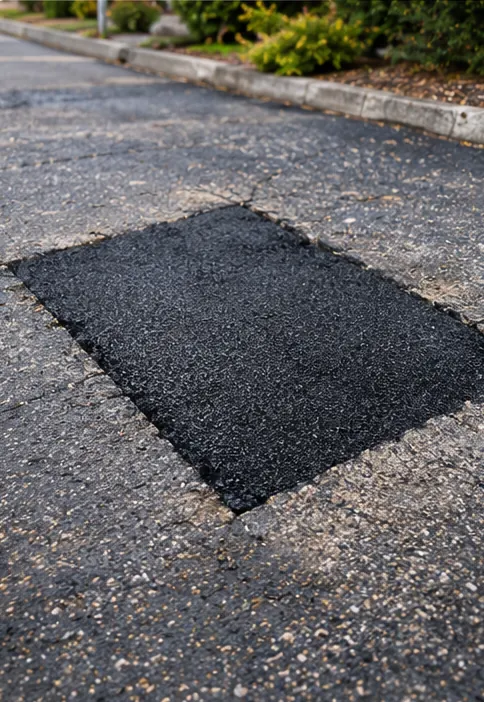
A contractor often cuts a square or rectangle around the hole, far enough out to reach sound asphalt. They remove the damaged material and check what’s underneath. If the inspection shows that the stone and soil provide firm support, the stone can stay. If the stone has shifted or weakened, the contractor needs to decide how much to repair. [1, 2]
Depending on the method, the crew may use a tack coat. This is a thin coat that helps the new asphalt stick to the asphalt it touches. The crew lays the mix, packs it down and treats the joint around the patch if needed. Even a patch with clean edges can fail if the base keeps moving or water still collects there. Dust, loose material left behind, and a mix that cools too fast can also weaken the repair. [1, 2, 4]
Infrared asphalt repair
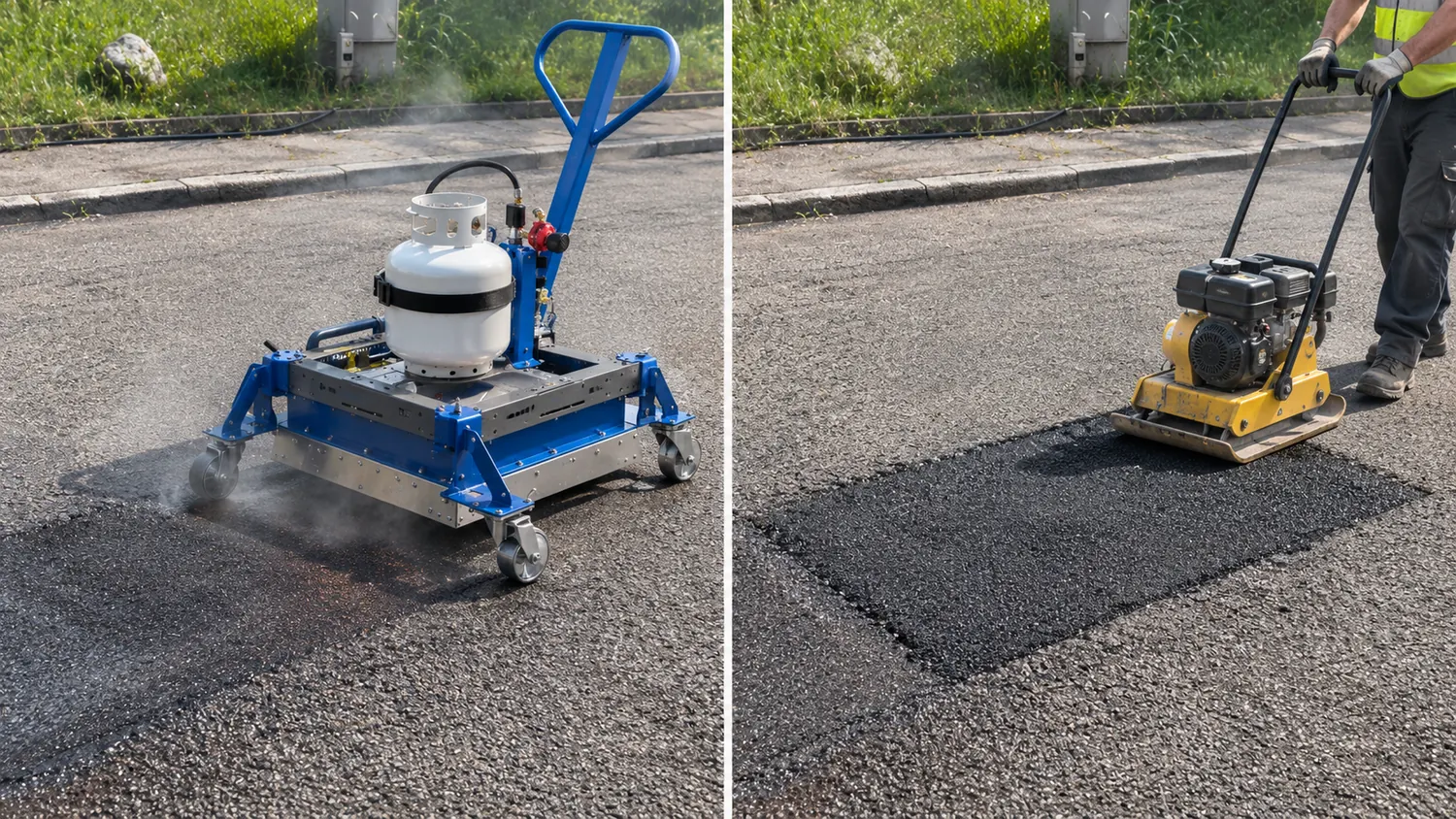
An infrared heater softens the existing asphalt. The crew loosens the softened layer so it can be reshaped. Depending on the method and the condition of the asphalt, they may add a product that softens the old binder. The binder is what holds the stones in the asphalt together. The crew can also add fresh asphalt to replace missing material. They then shape the surface and compact the area. [5, 6]
Infrared repair can work for some shallow defects. Cold, wind, water, the condition of the mix and what the equipment can do all affect the job. If a lot of asphalt is missing or what’s left is too damaged to rework, cutting out and replacing the area may be a better fit. If the base is unstable, the affected layers need to be checked and repaired. Heating the surface can reshape the patch, but it cannot restore a sunken base or correct the slope of the whole driveway. [2, 5, 6]
When does the base need repair?
If an inspection finds that the stone or soil has weakened, the repair needs to go deep enough to reach firm material. The crew fixes and compacts the affected layers before laying new asphalt. If water is part of the problem, the plan also needs to show where it will drain. A deep repair can be limited to one area. When the damage shows up in several places, a larger part of the driveway needs to be checked. [1, 2, 3]
Ask these four questions before accepting a quote.
- What do you think caused the pothole?
- What will you remove, and how will you check the stone underneath?
- What conditions do you need to do the work?
- If water is part of the problem, where will it drain after the repair?
What can you do in January in Vaudreuil-Soulanges?
If the hole is in the way, show the person who clears your driveway where it is. Go around it if you can. A plow blade can catch the edge of the hole and pull up more asphalt. During a thaw, take a photo from a safe spot. Check whether water comes back, the edges crumble, or the low spot gets bigger.
If you need to keep the driveway usable, a suitable cold mix can serve as a temporary patch. Follow the product instructions. Ice, water and a frozen base can make the patch harder to place well. If the area is unsafe or the hole is growing, have it checked before spring. After the thaw, look for signs that the hole has spread or the patch has come loose. The weather and the condition of the base help the contractor decide when to lay hot mix. [1, 4]
How can you slow the damage?
Clear any drainage outlets you can safely reach. Watch where water goes during rain or snowmelt. Look for cracks, joints that start to open and areas that begin to crumble. Keep heavy vehicles away from damaged edges and any area that’s sinking. See our guide to how freeze–thaw cycles affect asphalt. [2, 3]
Hot rubber crack sealing can help reduce how much water gets in through suitable cracks. A surface sealer is used to maintain asphalt that’s in good enough shape to be sealed. Missing asphalt, a poor slope and a weak base each call for their own repair. [3, 7]
Frequently asked questions
How can I tell a pothole from a low spot?
Look for missing pieces of asphalt. If the pavement is still in place but sits below the rest of the driveway, it’s a low spot. Both can hold water.
Can you fill a pothole in January?
Yes, if the cold mix suits the temperature and the condition of the hole. This can help keep the driveway usable for now. Check the patch again after the thaw.
When is infrared repair a good option?
It can work when the damage is shallow, the asphalt can still be reworked and the base is stable. The contractor also needs to check for water and consider the conditions on site.
Does the stone always have to be replaced after a cutout?
No. If the inspection shows that the stone is in good shape and rests on firm ground, it can stay. Cutting out the asphalt helps the crew see which layers need to be checked.
Why does the same pothole keep coming back?
The patch may not have bonded well or been packed down firmly enough. Water may still collect there, or the base may keep moving. Have the cause checked before filling the hole again.
When does a larger part of the driveway need repair?
When an inspection finds damage that goes beyond the hole. If several areas are sinking or crumbling, have the whole driveway checked to see which sections need work.
Can driveway sealer or hot rubber fill a pothole?
A pothole needs a suitable repair mix to replace the missing asphalt. Hot rubber is used to seal suitable cracks. Driveway sealer is used for surface maintenance.
If your driveway is ready for routine maintenance, you can request a quote from PolyScellant for asphalt sealing or crack sealing.
Technical references
- Québec Ministry of Transport — Réparation des nids-de-poule
- Dwight Walker, Asphalt Institute — Repair of Asphalt Parking Lots and Driveways
- Federal Highway Administration — Geotechnical Aspects of Pavements, Chapter 3
- CERIU — Guide de bonnes pratiques de réparation de nids-de-poule
- RynoWorx — R2, R3 and R4 Infrared Asphalt Heater Manual
- Victoria Speller, University of Waterloo — A Study on Optimizing Infrared Heating Technology for Asphalt Pavement Maintenance and Rehabilitation
- InfraGuide, National Research Council Canada archive — Guidelines for Sealing and Filling Cracks in Asphalt Concrete Pavement