ASPHALT CRACK REPAIR · VAUDREUIL-SOULANGES

Different cracks. The right treatment for each.

Professional hot-pour crack sealing with our RynoWorx equipment, solutions for finer cracks when appropriate, and a dark anti-tracking aggregate finish. Careful work for driveways and commercial parking lots.

REQUEST A FREE QUOTE →
✓ Specialized equipment✓ Treatment matched to the crack✓ Anti-tracking finish
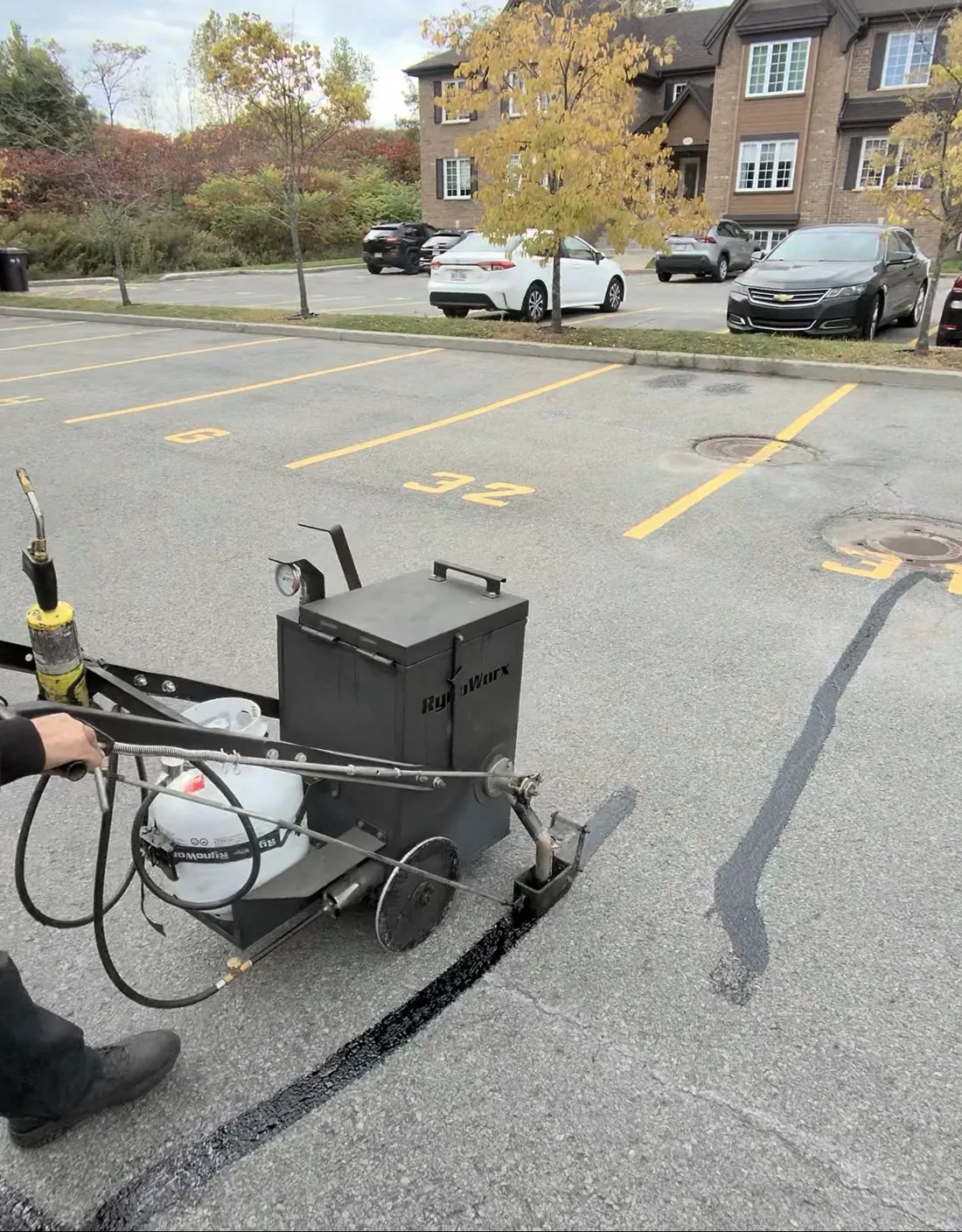
PolyScellant RynoWorx crack repair equipment
WHY IT MATTERS

Small openings can become bigger problems

Water and debris can enter cracked asphalt. Québec freeze–thaw cycles and pavement movement may contribute to further damage.

Appropriate crack sealing aims to limit water intrusion and slow deterioration. It cannot rebuild failed pavement or correct a damaged base. We assess the pavement—not simply the number of visible cracks.

Important: not every visible crack should be filled with hot rubber. Width, depth, movement and the surrounding pavement condition determine the right treatment.
SIZE MATTERS

Under ¼ inch? Let us assess it before work begins.

About ¼ inch (6 mm) is our practical starting point for considering hot-pour rubber, not a universal technical rule.

✓Under ⅛ inch (3 mm)Fine hairline cracks may be too narrow for individual filling. We assess whether any treatment is appropriate.
✓⅛ to under ¼ inch (3–6 mm)Narrow cracks may be better suited to a compatible cold-applied material or another approach.
✓About ¼ to ½ inch (6–13 mm)Often candidates for hot-pour rubber where pavement is stable and the crack can be properly prepared.
✓About ½ to 1 inch (13–25 mm)Requires assessment of depth, movement, edges and the appropriate treatment method.
✓Over 1 inch, settled or extensively cracked pavementPatching, pavement repair or structural work may be more appropriate.

What your quote includes: we define which cracks and treatments are covered. Hairline cracks and extensive repairs are not automatically included in a hot-pour crack-sealing quote.
KNOW YOUR PAVEMENT

Crack type changes the repair

Two cracks of the same width do not always require the same treatment.

✓LongitudinalCracks running lengthwise, sometimes along joints or areas of movement.
✓TransverseCracks running across the pavement; some open and close with changing temperatures.
✓Block crackingLarge rectangular patterns may reflect aging. We assess the condition and stability of each section.
✓Alligator crackingDense interconnected cracks can indicate fatigue or base problems. Rubber sealing does not correct underlying failure.
HOT OR COLD?

Why use hot rubber on suitable cracks?

The most expensive product is not necessarily right for every crack. Selection depends on crack width, movement and pavement condition.

✓ HOT-POUR RUBBERIZED SEALANT
  • Designed to bond with a prepared crack and retain some flexibility.
  • Often appropriate for cracks that move seasonally.
  • Requires specialized heating equipment and temperature control.
  • Initial setting largely occurs as the material cools, depending on formulation.
✓ COLD-APPLIED MATERIAL — FOR SOME CASES
  • Can suit fine, relatively stable cracks or situations unsuitable for hot-pour sealant.
  • Usually requires less equipment.
  • Performance, shrinkage and curing time vary by product.
  • It is not a universal substitute for hot rubber.

We do not claim every cold-applied product is inferior. We use suitable cold-applied materials ourselves in some fine-crack situations. Choosing the correct treatment is what matters.

OUR EQUIPMENT

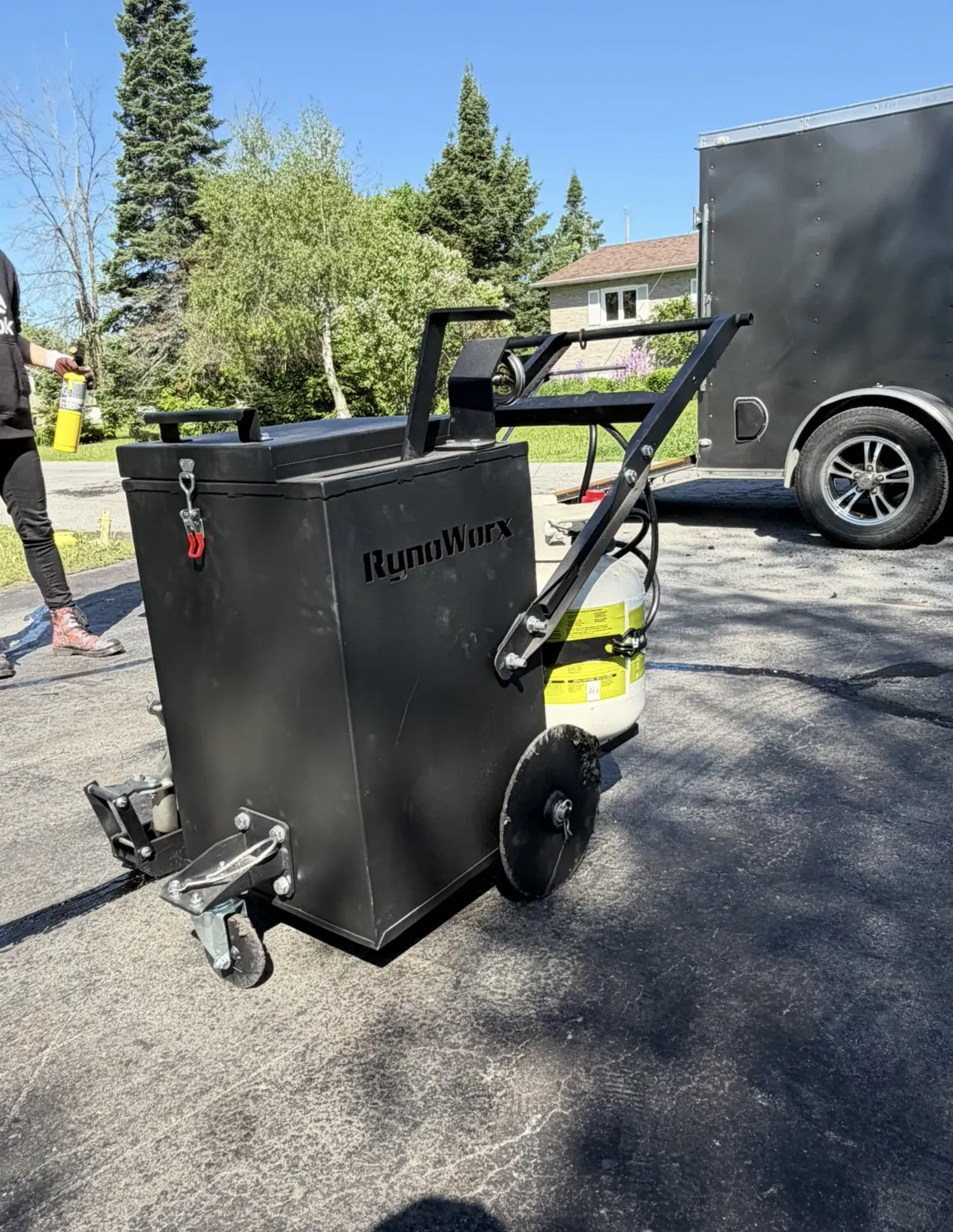
RynoWorx RY10: more than a machine that pours asphalt

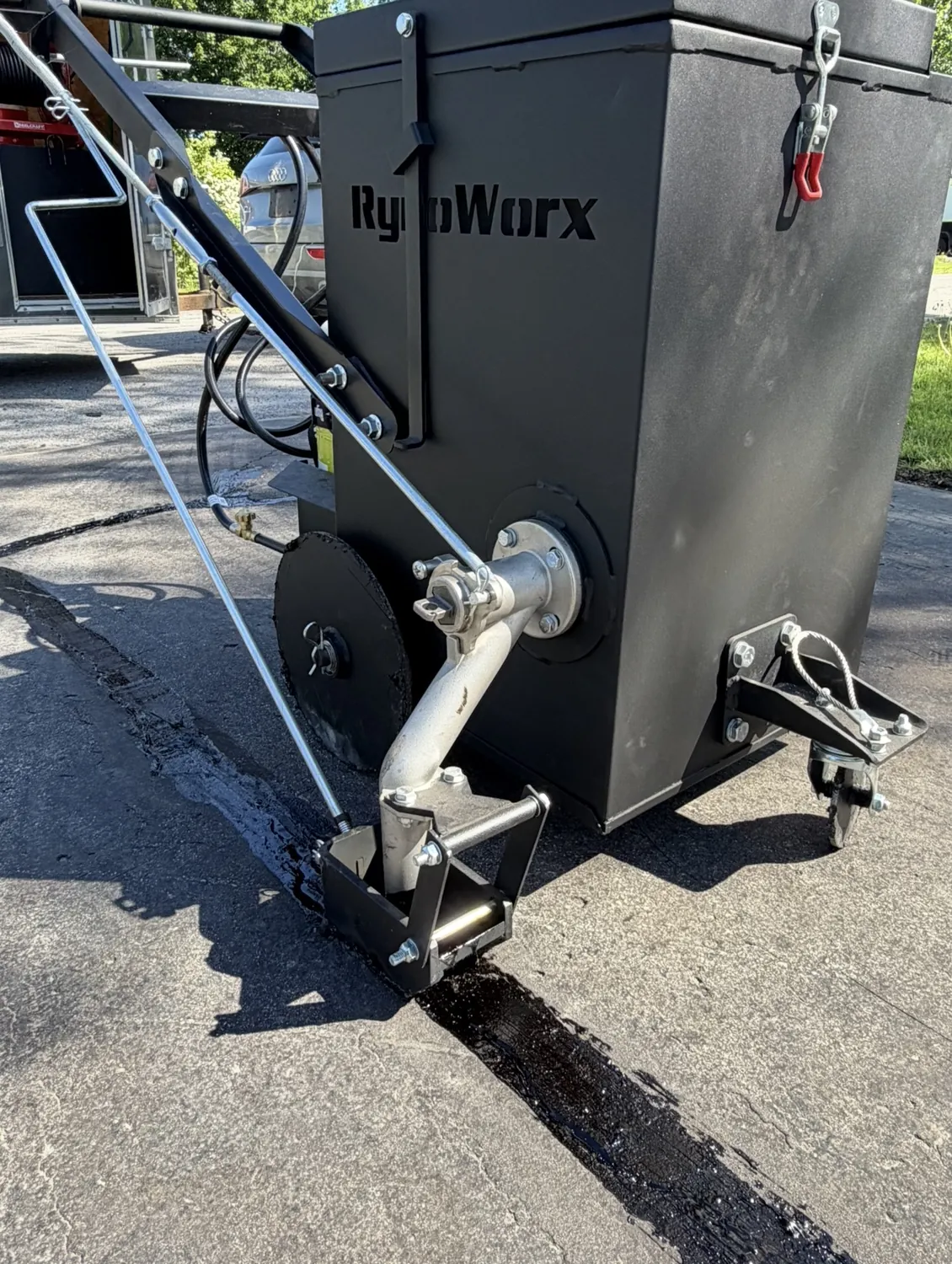
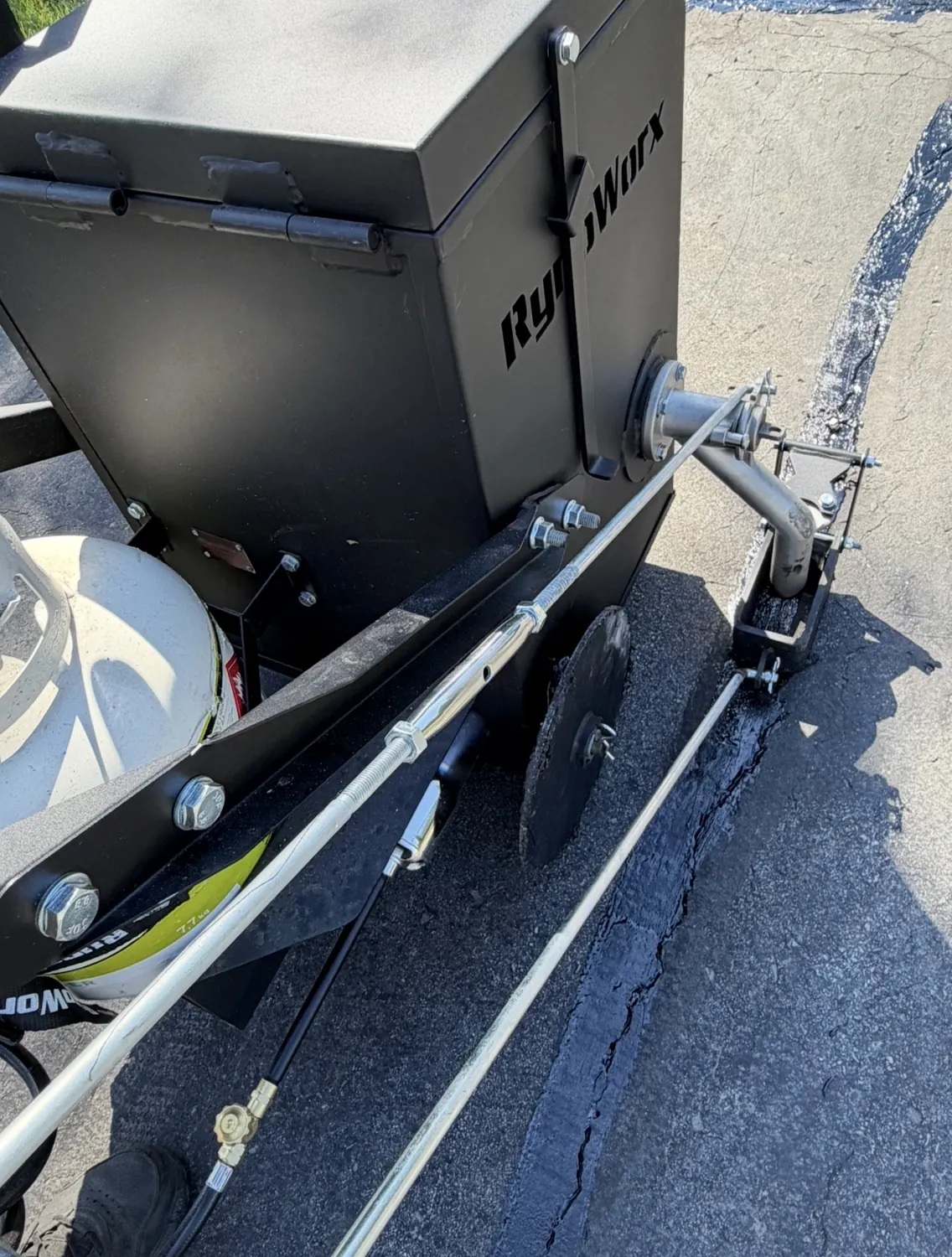
Our propane-heated melter-applicator is designed to melt compatible crack-sealing material and control its flow along prepared pavement cracks.

PolyScellant RynoWorx hot-pour crack sealing equipment

Controlled, consistent placement

Before applying material, we remove loose debris, dust and contaminants. The crack must meet the material manufacturer’s dryness requirements.

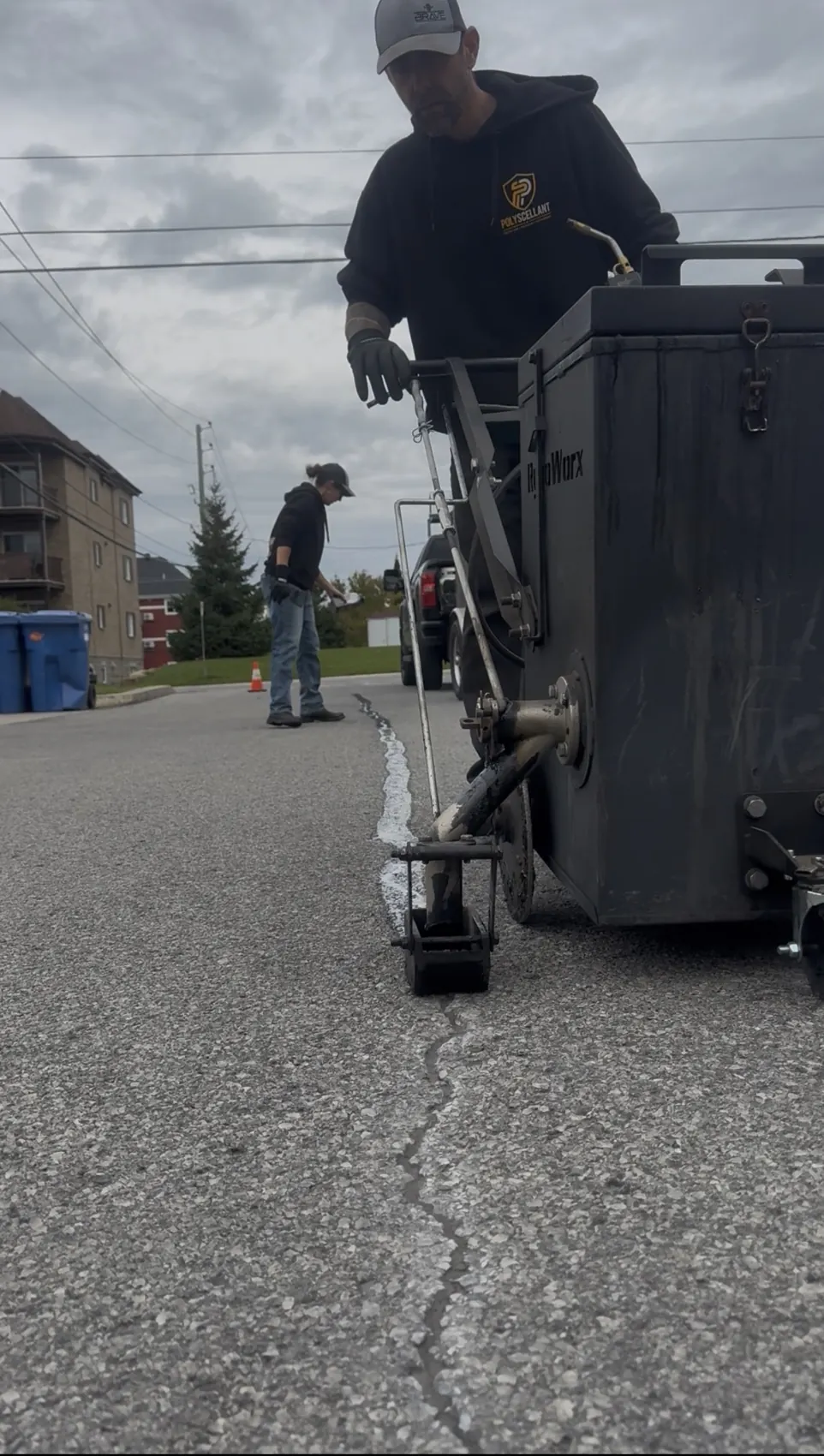
The material is brought to its specified application temperature. Monitoring heat is important because overheating can harm the sealant. The machine then controls the material flow along irregular cracks.

Work quality depends on judgment, preparation, temperature control and careful placement—not just owning a machine.

THE MATERIAL

Why choose hot-pour rubberized crack sealant?

Crack sealant is not the same thing as Blackmac surface sealer, which covers the broader asphalt surface.

✓Limit water penetrationThe material forms a seal at treated cracks to help limit water and debris entering the pavement.
✓Accommodate some movementA suitable rubberized formulation can tolerate a degree of seasonal expansion and contraction.
✓Prepare and heat correctlyDirty or wet cracks and overheated material can compromise adhesion and performance.
✓Treatment, not reconstructionHot rubber cannot replace patching, base reconstruction or drainage correction.
What you are paying for: inspection, travel, preparation, heating specialized material and careful application all require time, equipment and skill. Price per linear foot alone does not tell the full story.
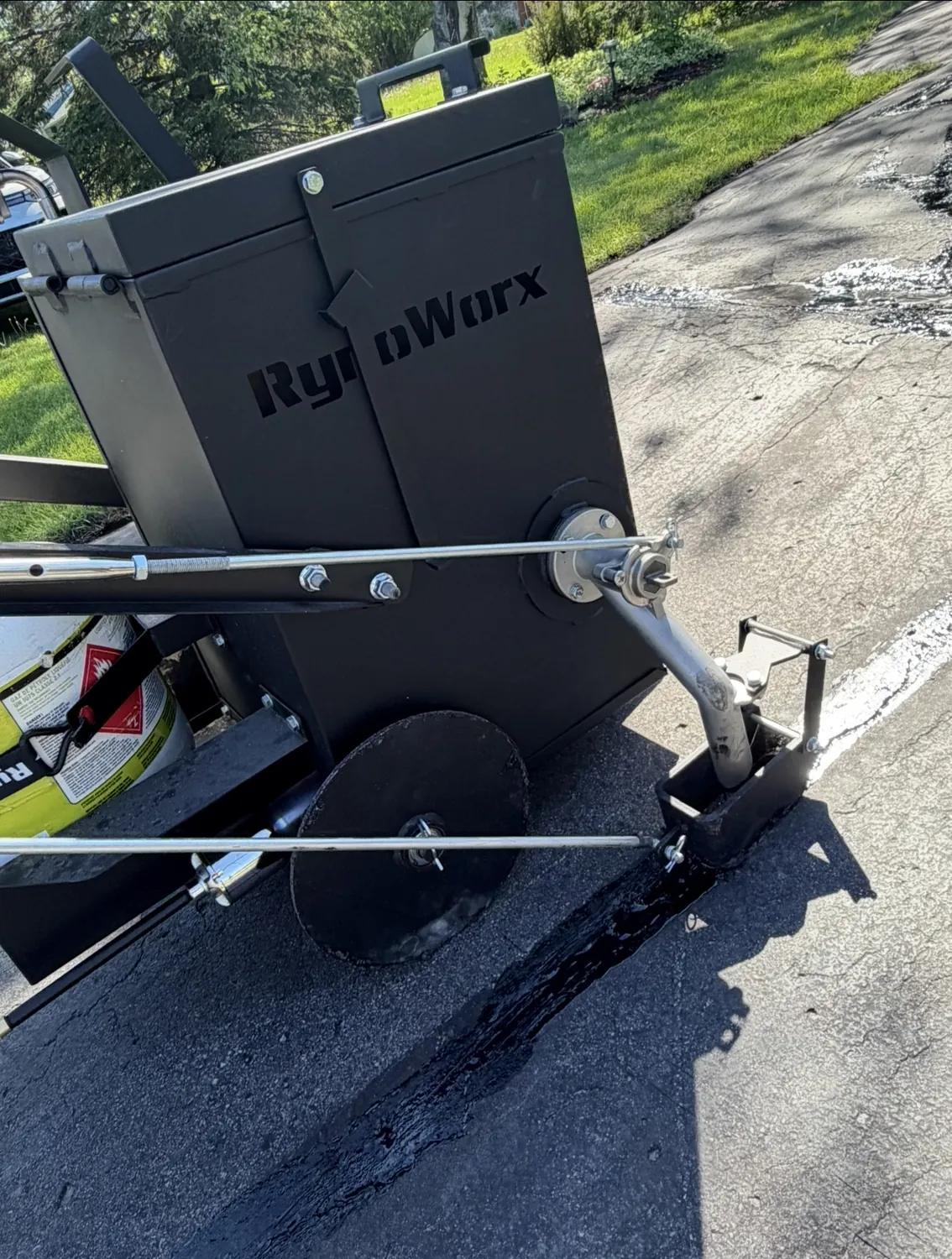
Real hot-rubber crack-sealant application with PolyScellant RynoWorx equipment
Real job photo: the RynoWorx applies rubberized sealant to a prepared crack.
OUR ANTI-TRACKING FINISH

Why sprinkle black aggregate onto still-hot rubber?

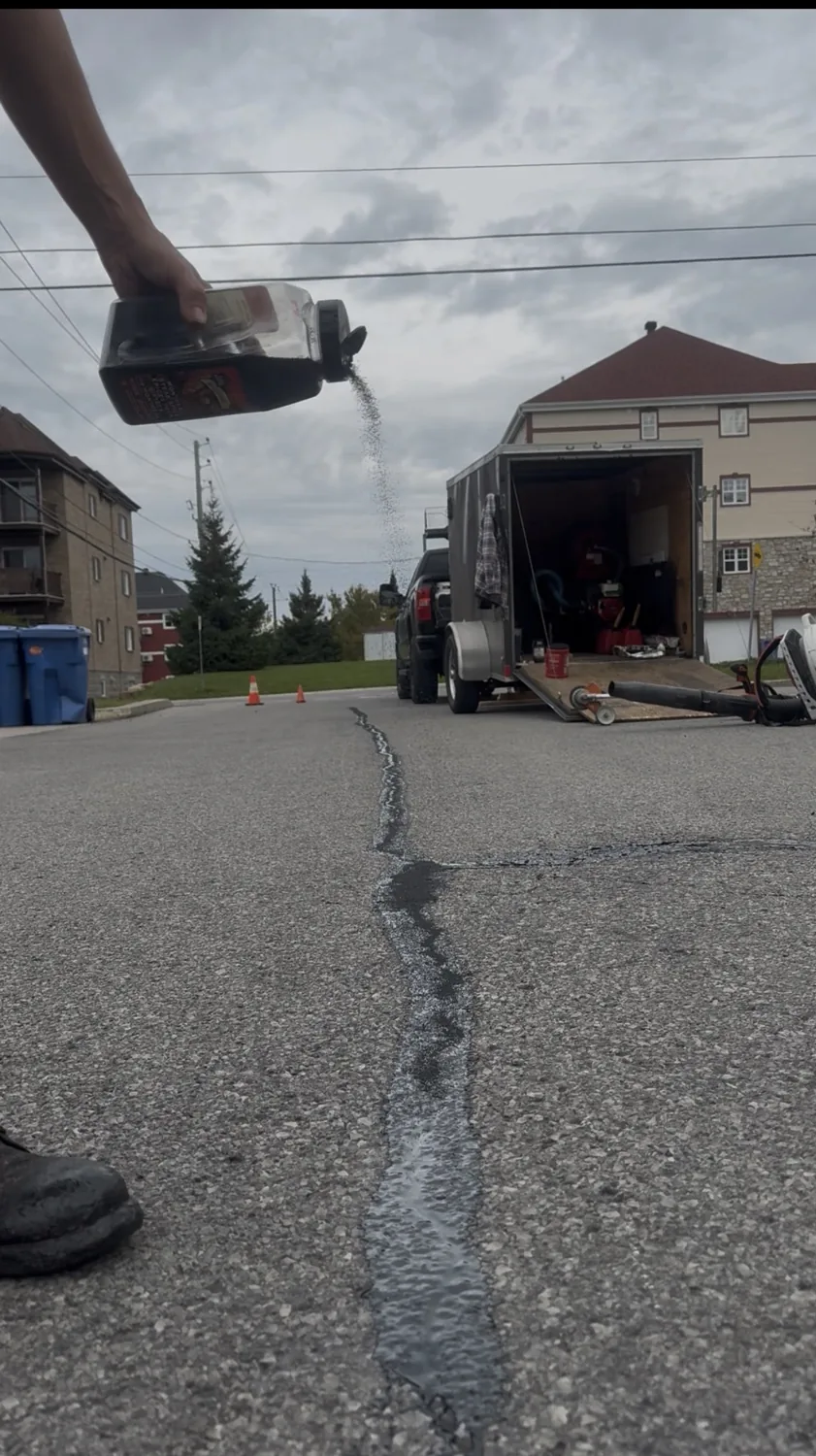
This extra step, shown in our genuine work photograph, addresses a real issue: a tire can stick to fresh sealant and pull some of it out of the crack.

PolyScellant sprinkling black aggregate on freshly applied hot crack sealant

Hot rubber followed by a practical finishing step

The rubber is still hot after our RynoWorx passes. During cooling it may remain tacky. Tires crossing too soon can pick up sealant and damage the fresh repair.

We immediately spread fine, dry black aggregate over the new sealant. Grains adhere to the surface, forming a separation layer that helps reduce tire pickup and premature tearing. In the industry this is commonly called blotting.

The dark colour also makes sealed cracks less contrasting on asphalt. The finish has a practical function—it is not merely decorative.

Note: aggregate does not mean traffic can return immediately. We provide reopening guidance based on product requirements, weather and actual job conditions.

Our anti-tracking finish: we use black quartz on freshly applied hot rubber to help prevent tires from sticking to and pulling up the new crack sealant. Depending on availability and job requirements, we may also use BLACK BEAUTY black abrasive. These are different materials: BLACK BEAUTY is a coal-slag abrasive, not natural silica sand. Aggregate selection and reopening instructions depend on the material and site conditions.
OUR PROCESS

What actually happens on your property

Professional crack sealing involves multiple operations. It is not simply pouring material over an opening.

✓1. InspectionAssess crack width, stability and treatment areas.
✓2. PreparationRemove debris and clean the cracks included in the work.
✓3. Material heatingBring compatible rubberized sealant to its specified application range.
✓4. Controlled placementApply the selected treatment to prepared cracks with care.
✓5. Finish and instructionsUse anti-tracking aggregate when appropriate, inspect the work and explain when traffic can resume.
REAL WORK

The equipment and technique behind the result

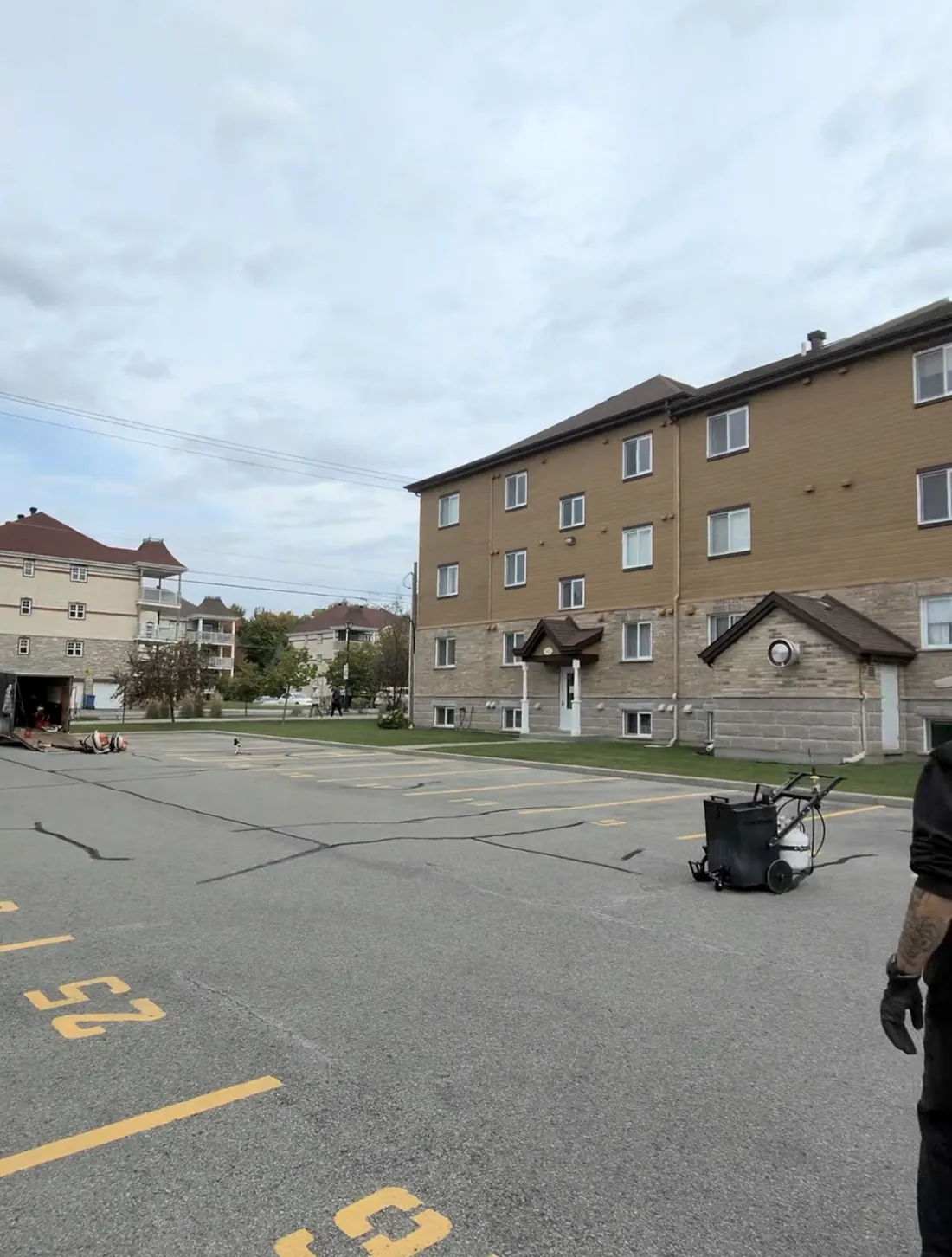
Genuine job photographs. Sealed crack lines generally remain visible; the goal is suitable treatment, not making them disappear.

PolyScellant crack sealant equipment
Our specialized equipment
Hot-pour crack sealant in use
Rubberized crack treatment
Black aggregate applied over fresh sealant
Anti-tracking finish — real photo
Crack sealing on a paved surface
Parking-lot crack treatment
Close-up of the RynoWorx crack-sealing equipment
RynoWorx equipment close-up
Side view of hot crack sealant application
Hot rubber application in progress
FREQUENT QUESTIONS

Before requesting a quote

Straight answers to common questions.

Are all cracks included?

No. We specify the locations and treatments in the quote. Hairline cracks, large openings and unstable areas may require a different approach.

Why not fill every crack with hot rubber?

Some are too narrow for the method to perform properly, while others indicate structural failure that requires another repair.

Do you ever use cold-applied filler?

Yes. We may use an appropriate product for certain narrow or specific cracks after assessment.

Will the repaired lines disappear?

No. Crack-sealing lines are generally visible, even if a surface sealer is applied later.

Why add black aggregate?

To help prevent freshly applied sealant from sticking to tires and being pulled up during initial cooling.

Can I drive over it immediately?

Not necessarily. We provide instructions based on the product, temperature, weather and expected traffic.

Does crack sealing fix a damaged base?

No. Settlement, potholes and structural fatigue need separate evaluation.

Can I book only crack sealing?

We can assess stand-alone crack work depending on project scope and efficient route scheduling.

LOCAL SERVICE

Residential driveways and commercial parking lots

Serving Vaudreuil-Soulanges, with work grouped efficiently by municipality.

THE RIGHT TREATMENT STARTS WITH AN ASSESSMENT

Have your cracks evaluated first.

Tell us the approximate widths, affected areas and overall pavement condition. We will recommend appropriate work and clarify exactly what the quotation includes.

One-year limited workmanship warranty on covered crack repairs. View terms.

REQUEST MY FREE QUOTE →