
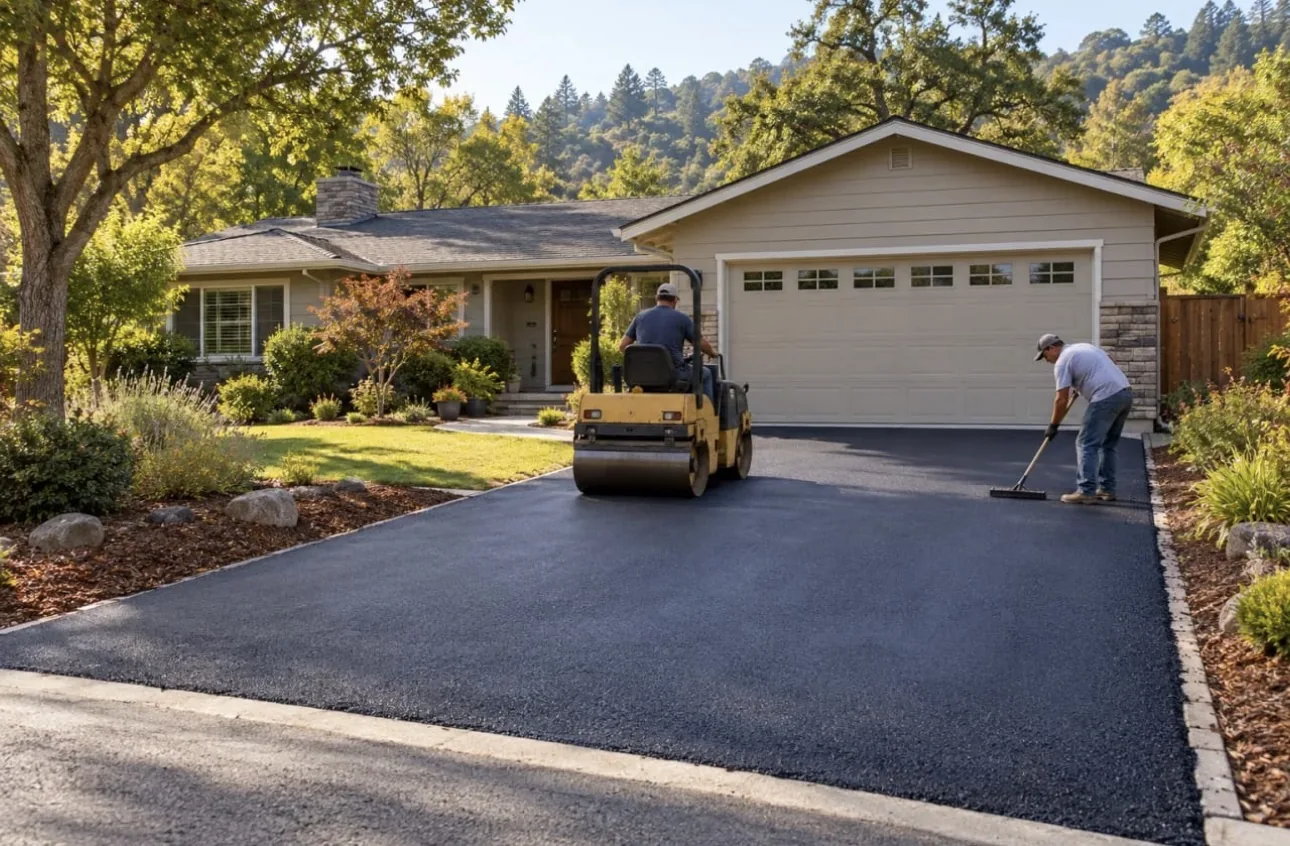
Can a newly paved asphalt driveway be sealed?
PolyScellant · Homeowner guide
Just had your driveway paved and want to protect your investment? Sealing it immediately is not automatically the right move. Timing depends on the pavement's condition, its age and the sealer you plan to use.
A commonly quoted guideline, not a universal rule or a confirmed Blackmac Cutback manufacturer requirement.
How long should you wait after paving?
Many general maintenance guides suggest waiting approximately 6–12 months before the first sealcoat. That is not a guarantee of compatibility: mix design, installation conditions, sunlight and the type of sealer can change the answer. Always consider the actual pavement and the product instructions.
What we actually see in the field
1–2 years
PolyScellant customers typically contact us one or two years after their driveway was paved.
No invented incidents
We have not had to turn down a job because the pavement was too new, nor have we personally observed a failure we could attribute to premature sealing.
Assess first
The calendar is only one factor. Surface condition, needed repairs and product compatibility matter.
Why not rush to seal?
Freshly laid asphalt already contains a substantial amount of asphalt binder. Another surface treatment is not automatically useful immediately after paving. Some sealcoat systems specify a weathering period, and requirements vary. An unsuitable application may give disappointing results, but we do not present those possibilities as failures we have personally witnessed.
What does McAsphalt actually say about Blackmac Cutback?
McAsphalt describes Blackmac as a solvent-based asphalt sealer for maintenance of existing asphalt pavement. Its product sheet calls for application above 10°C (50°F), adequate cleaning and no anticipated precipitation. The sheet reviewed does not prescribe a universal six- or twelve-month waiting period for new asphalt. It would be misleading to call that a manufacturer guarantee.
How can you tell whether your driveway is ready?
- Confirm when it was paved and ask the paving contractor about any restrictions.
- Inspect for cracks, settlement, weak spots, oil contamination and drainage issues.
- Check the specific sealer's requirements for recently paved surfaces.
- Schedule work when the asphalt is clean and dry and weather is suitable.
- If the surface is already excellent, consider whether sealing right now adds meaningful value.
Frequently asked questions
Must new asphalt be sealed in its first year?
No. The commonly quoted 6–12 months is a guideline, not a universal deadline.
Does newly paved asphalt need immediate protection?
New pavement is intended to perform without an immediate sealcoat. Preventive maintenance should be timed to actual condition and use.
Can Blackmac repair deep cracks?
No. Larger cracks and structural defects need appropriate repairs before surface sealing.
Technical source: McAsphalt — Blackmac Cutback product data sheet. Customer and jobsite observations are PolyScellant's own.
Your driveway deserves a proper assessment.
PolyScellant serves Vaudreuil-Soulanges. Tell us about your driveway, its condition and your questions.
Fill out the online quote form →📞 Call us